

Makes you want to eat more rice! 11 Local Gourmet Foods from Yamagata | Regional Dishes That Go Perfectly with White Rice
2026/03/15 This site contains advertisements. Category: local-food
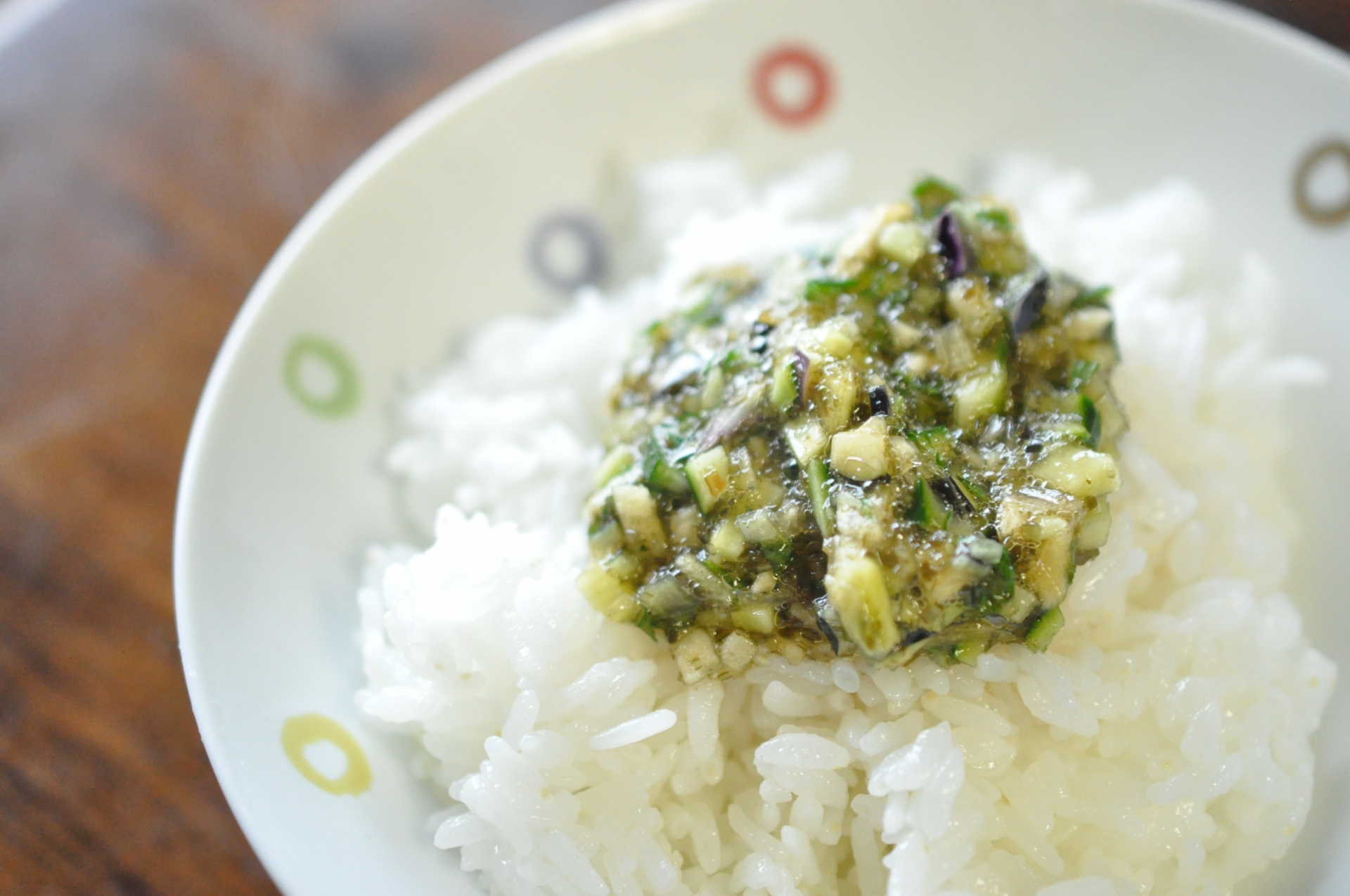
Yamagata Prefecture has many delicious local dishes and regional foods that make the most of local ingredients. Many of these dishes are simple yet full of flavor, and some are commonly enjoyed as “side dishes that go well with rice.” In this article, we will introduce seven regional foods from Yamagata that pair perfectly with white rice. If you want to learn about Yamagata’s food culture and specialty dishes, or are looking for foods to try while traveling, this guide will be helpful.
What Are Yamagata’s Regional Foods? Characteristics of Local Cuisine
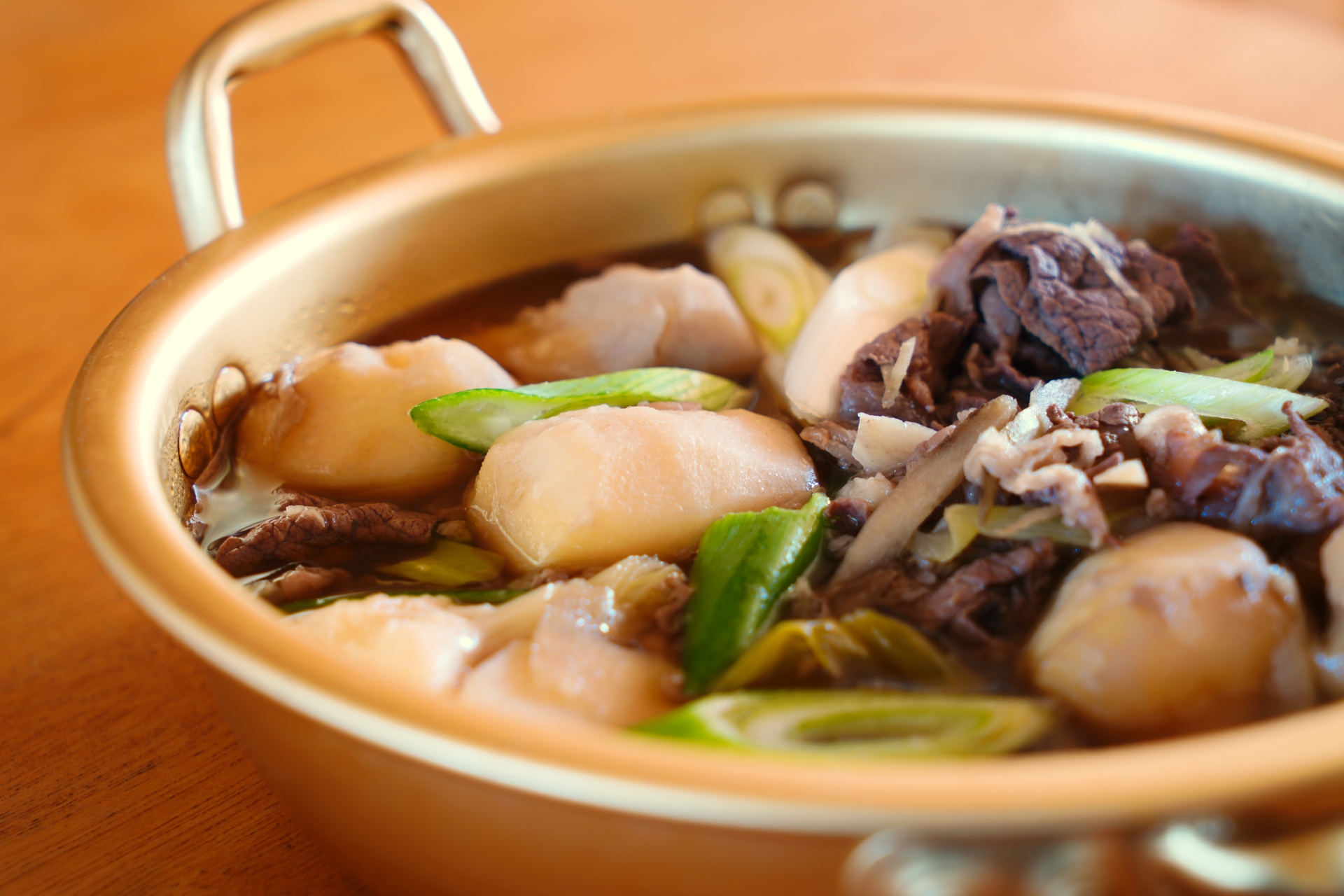
Yamagata Prefecture is blessed with the nature of mountains and the sea, and various local dishes have developed in each region. It is characteristic that many dishes make use of local ingredients, such as mountain delicacies like wild vegetables and taro, and seafood from the Shonai area.
In addition, many dishes have a rich flavor using miso and soy sauce, and it is also a feature of Yamagata’s food culture that many dishes go well with white rice. Local dishes that have been passed down as home-cooked meals have now become popular local gourmet foods among tourists.
Can’t Help But Have Seconds! 11 Famous Yamagata Dishes That Go Well With Rice
Yamagata’s local cuisine often features hearty seasonings based on miso and soy sauce, and there are plenty of dishes that pair well with rice. Here, we will introduce some of Yamagata’s representative local gourmet dishes that can also be enjoyed as companions to rice.
Yamagata no Dashi
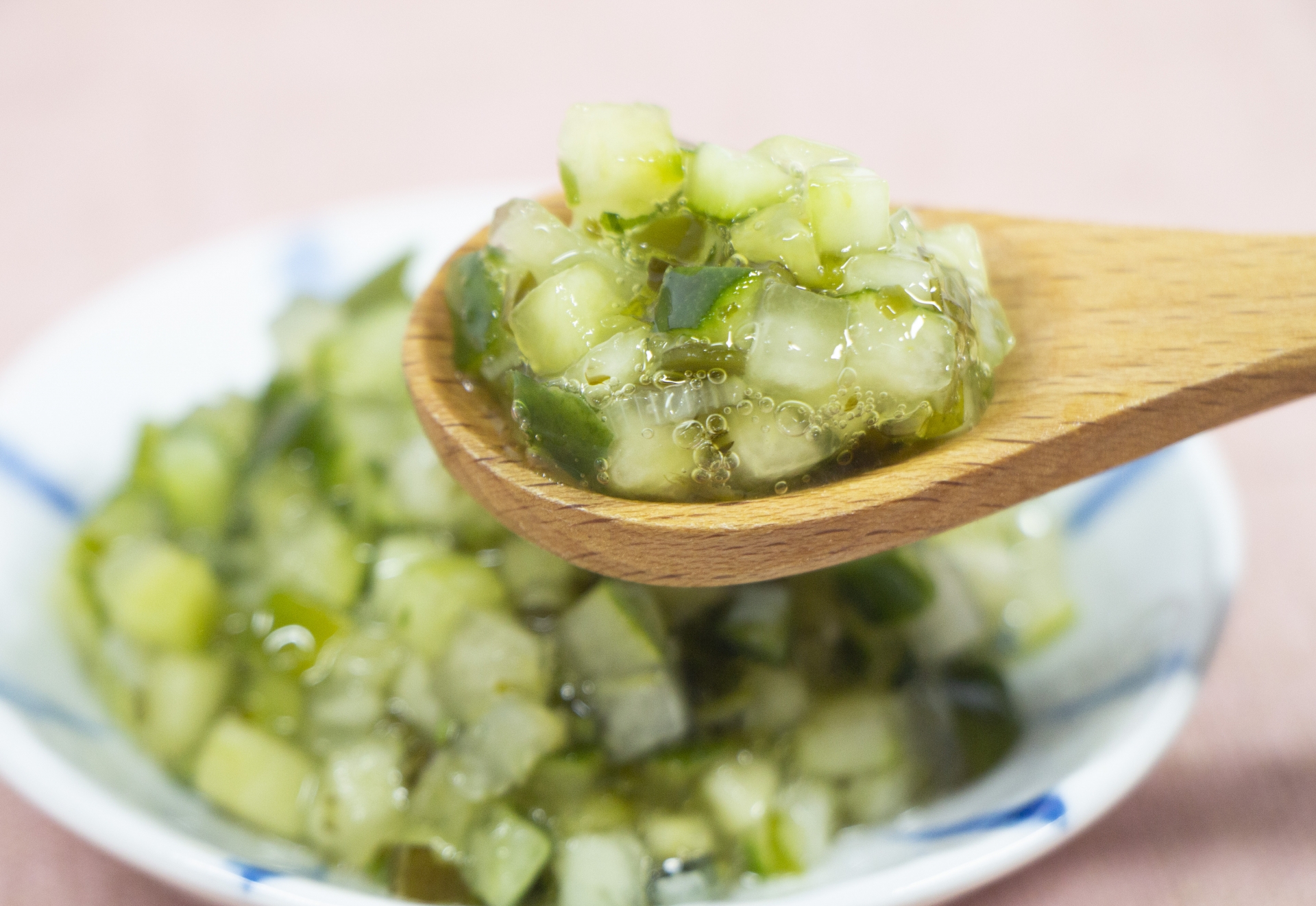
“Yamagata Dashi” is a representative summer local dish of Yamagata. It is made by finely chopping summer vegetables such as cucumber, eggplant, myoga, and shiso leaves, and seasoning them with soy sauce and dashi.
Despite its light taste, the aroma of the vegetables stimulates the appetite, and the classic way to eat it is to pour it over freshly cooked rice. It is easy to eat even in the hot season and is one of the local specialties that is commonly enjoyed in Yamagata households.
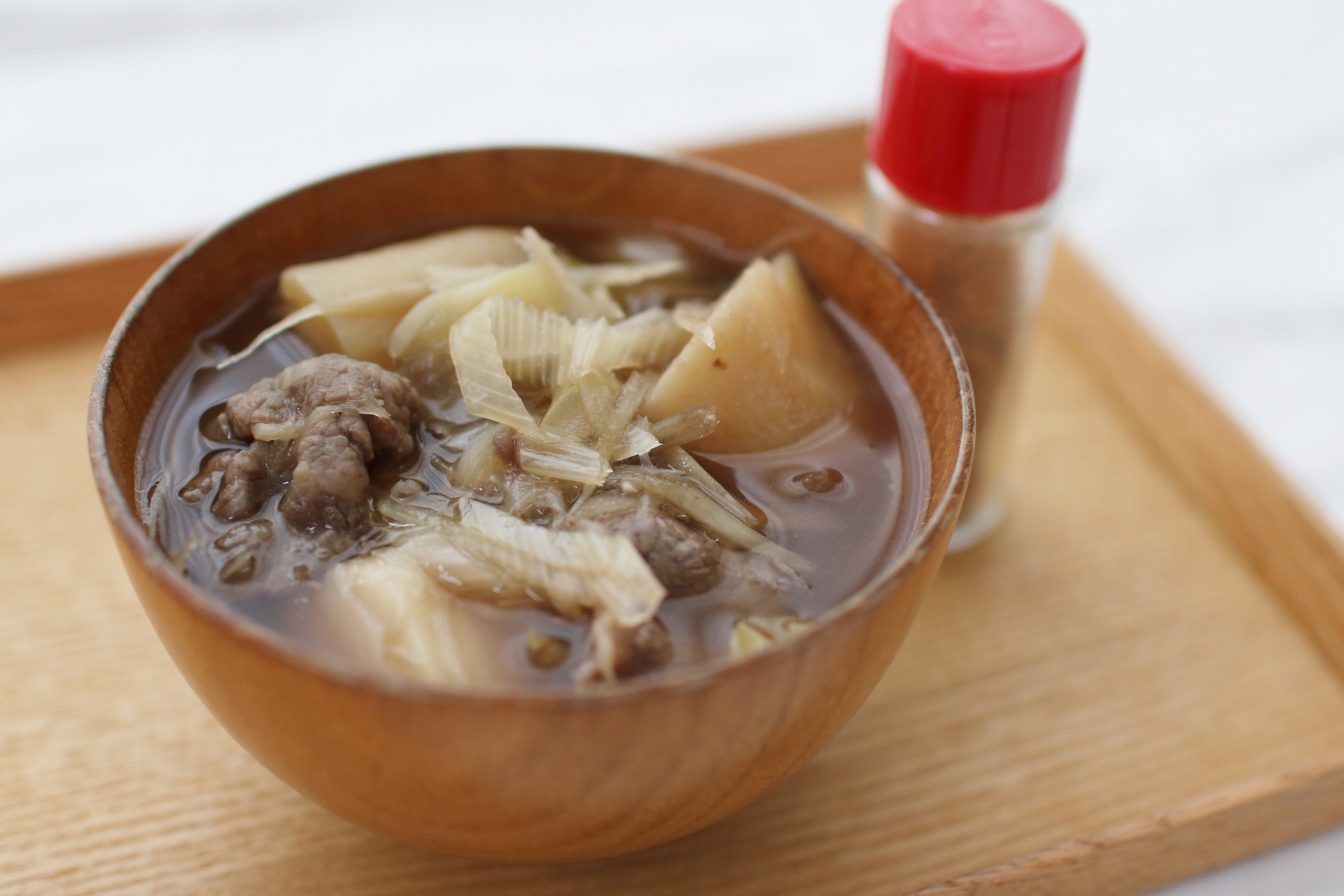
Imoni
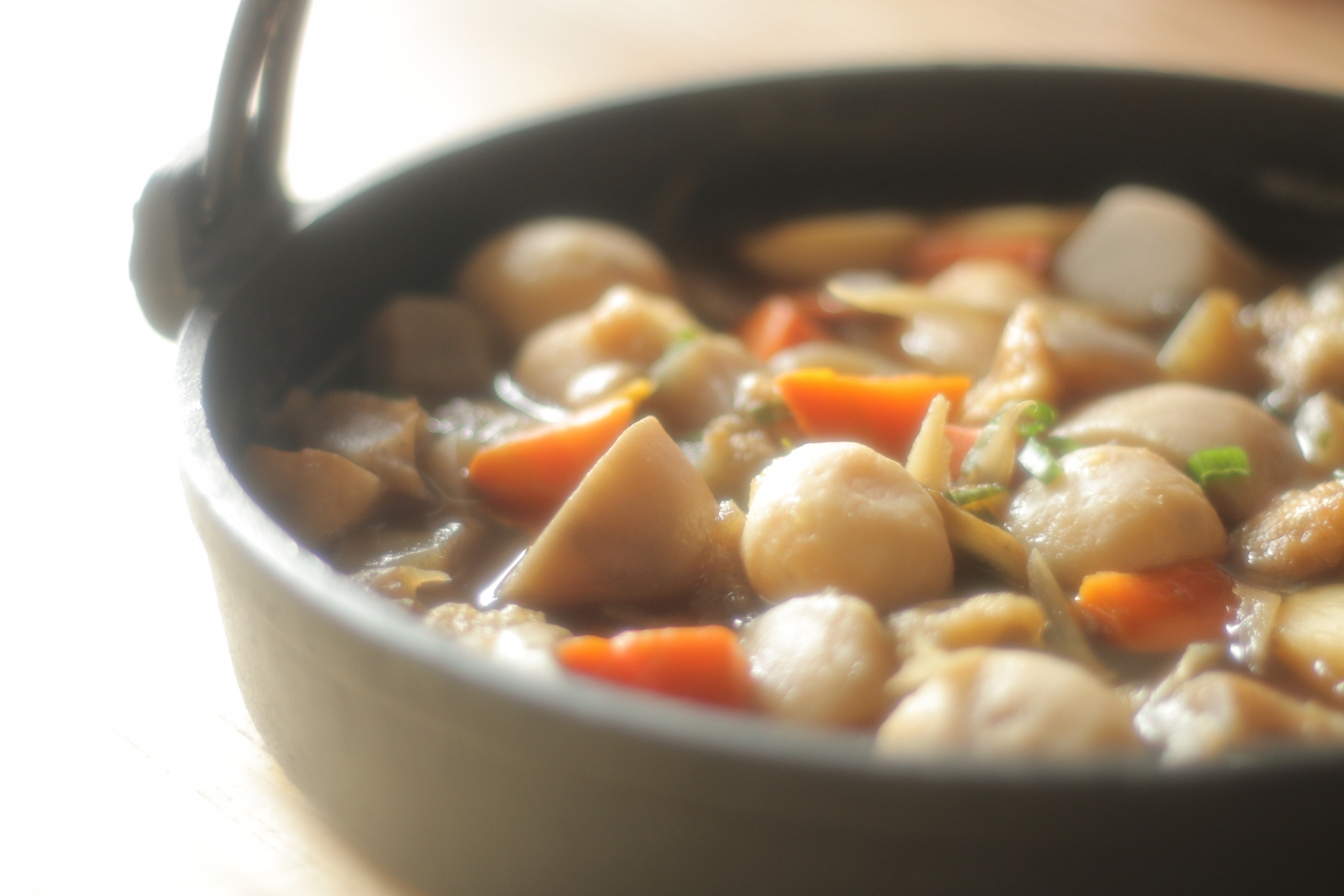
“Imoni” is a local dish representing Yamagata, consisting of a stew with taro, beef, konnyaku, green onions, and other ingredients. In particular, in the inland areas, a soy sauce-based seasoning is common, and the broth, which absorbs the umami of the ingredients, is a characteristic feature.
In autumn, it is also known for “Imoni parties” held by riversides, where people enjoy Imoni, making it a dish that symbolizes Yamagata’s food culture. It is a highly satisfying dish when eaten with rice.
Tama Konnyaku
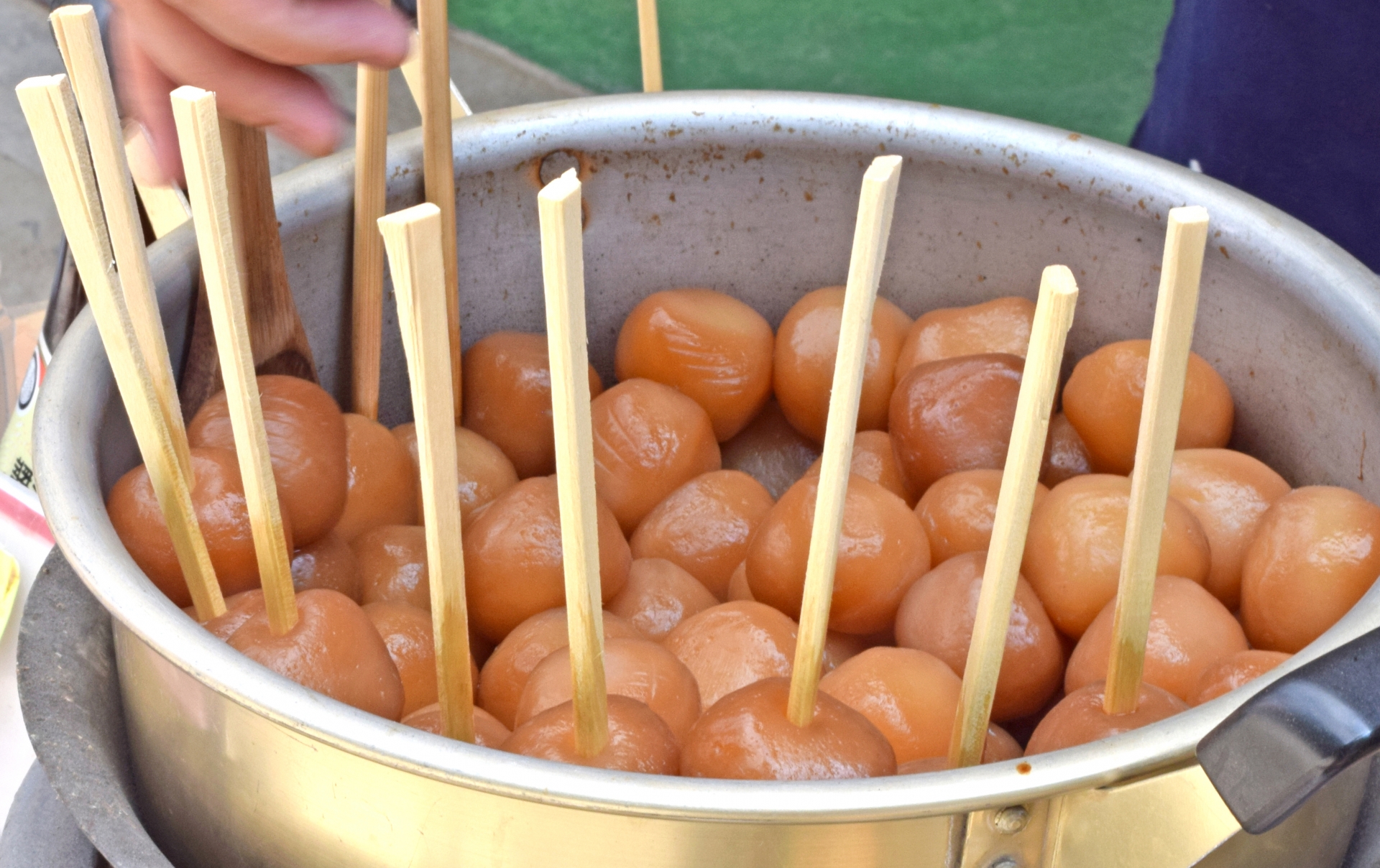
A specialty food often seen at tourist spots and events in Yamagata is “Tama Konnyaku“. It is a dish where round konnyaku is slowly simmered in a soy sauce-based broth and is often served skewered on sticks.
Although simple, it is well-flavored and has a plain yet never tiring taste that is attractive. It is known as a snack or accompaniment to drinks, but it can also appear on the dining table as a side dish for rice.
Shiso Rolls
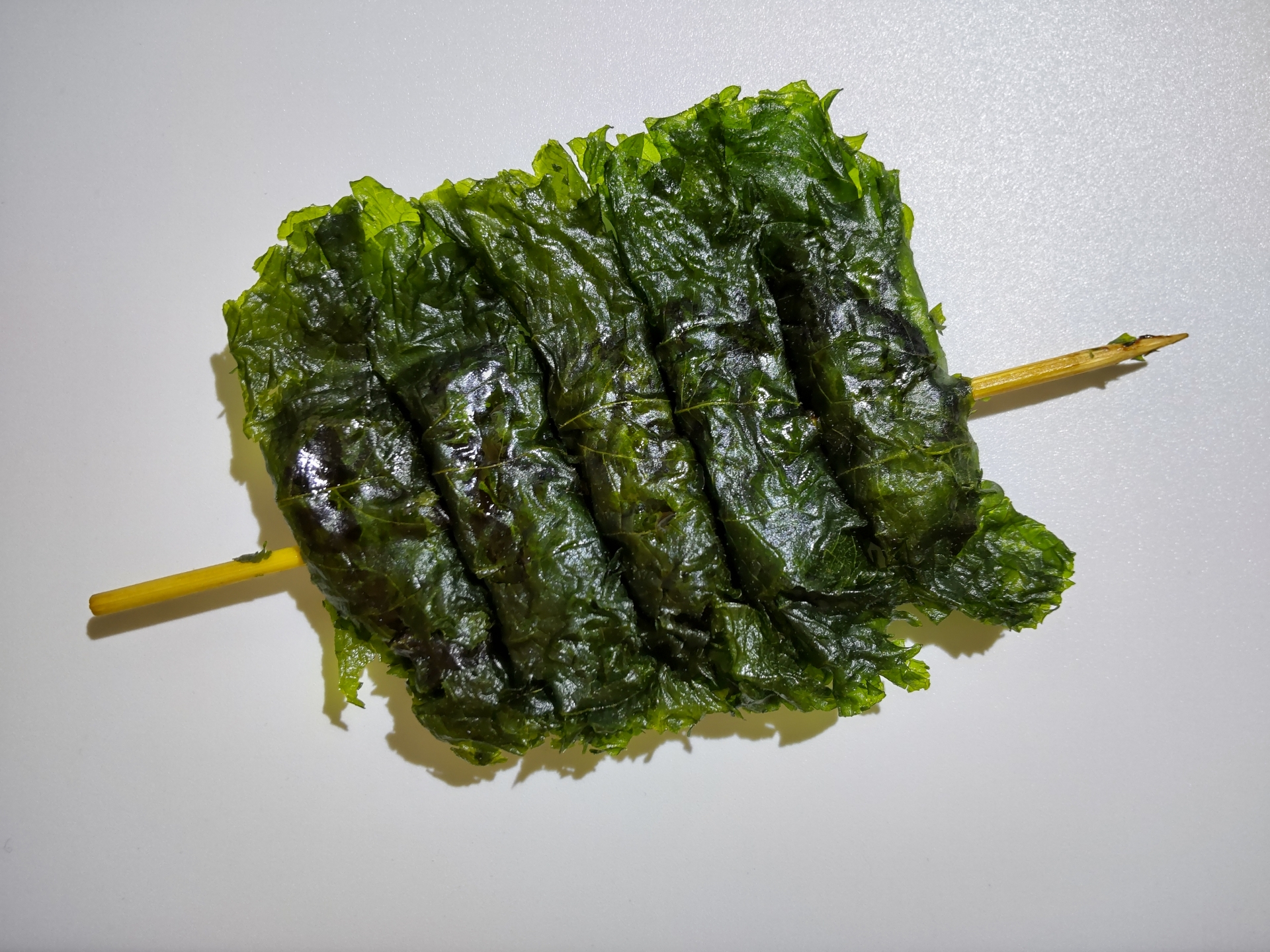
“Shiso Maki” is a local dish from Yamagata where miso paste mixed with ingredients such as miso, walnuts, and sugar is **wrapped in green shiso leaves and then fried (or grilled)**. It is a dish that has also been made as a preserved food and is especially enjoyed as a home-cooked side dish or with tea.
It is characterized by the rich flavor of miso, its sweet and savory seasoning, and the aroma of green shiso, making it popular as an accompaniment to white rice. Although it is small and bite-sized, it has a strong flavor, making it a dish that encourages eating along with rice.
Grilled Akebi with Oil
“Grilled Akebi with Oil” is a local dish from Yamagata, known as an autumn delicacy. The inside of the akebi peel is filled with miso, ground meat, green onions, and other ingredients, and then grilled in oil.
The unique flavor, combining the slight bitterness of akebi with the richness of miso, is a characteristic feature, and its savory taste makes it a popular side dish with rice. It can be said to be a dish that allows you to enjoy the mountain produce unique to Yamagata.
Omi-zuke
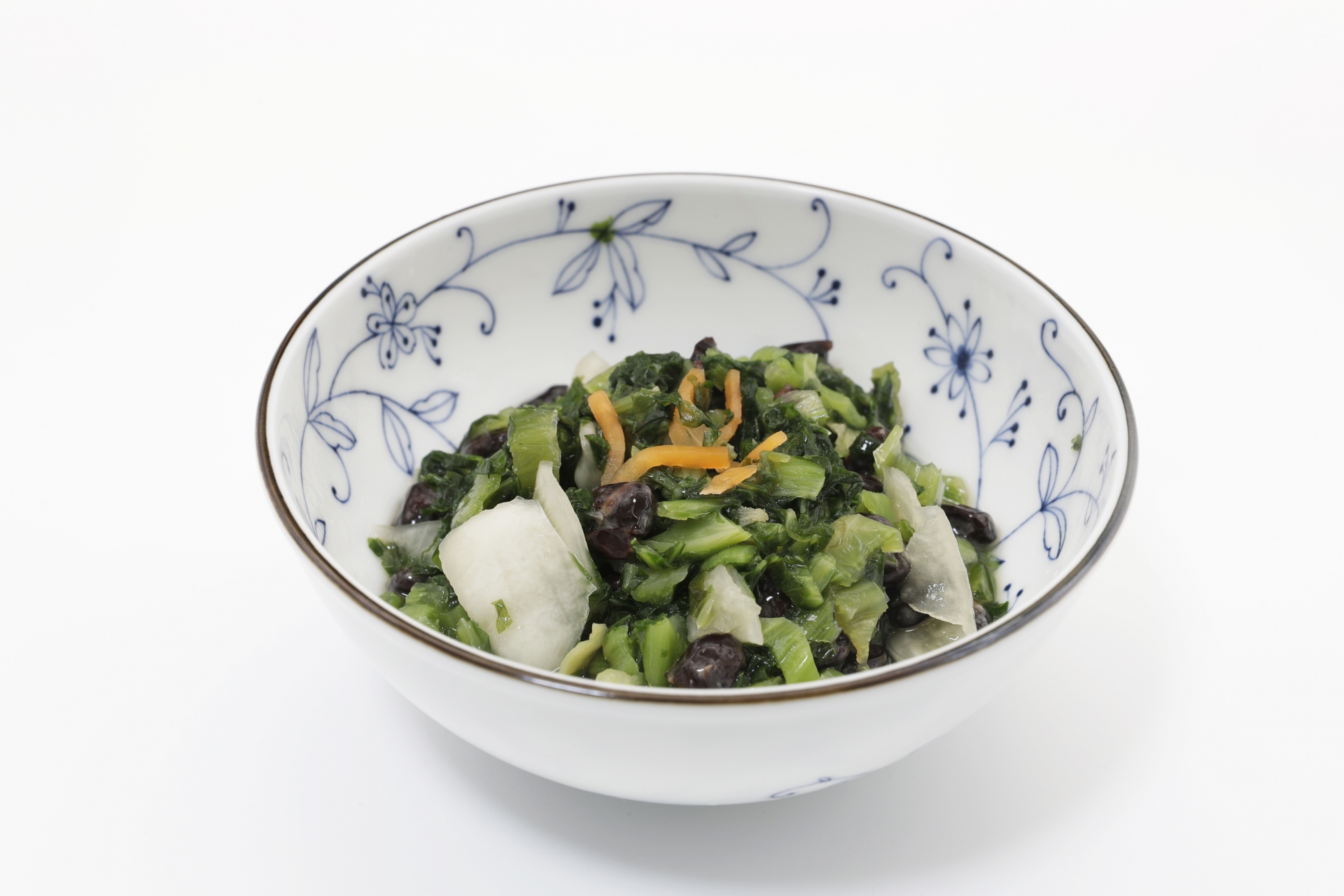
“Omizuke” is a traditional Yamagata pickle made by chopping and pickling greens, daikon radish, carrots, and other vegetables. It is characterized by its crisp texture and moderate saltiness.
It is enjoyed not only on top of rice but also as a filling for rice balls, and in Yamagata, it is known as a classic “companion for rice.”
Aona Pickles
“Aona-zuke” is a traditional pickle from Yamagata, commonly eaten at winter tables. It is characterized by being made with “Seisai (green vegetables)”, a specialty of Yamagata.
With its crisp texture and moderate saltiness, it is a very popular pickle to accompany rice.
Dongara-jiru
“Dongara-jiru” is a famous winter dish from the Shonai region. It is a hearty hot pot made using the whole fish, including the head and innards, of winter cod (kandara), and is known for its rich soup filled with the flavors of the sea.
It is enjoyed as a dish that warms the body during cold winters, and eating it together with rice makes for a very satisfying meal.
Natto Soup
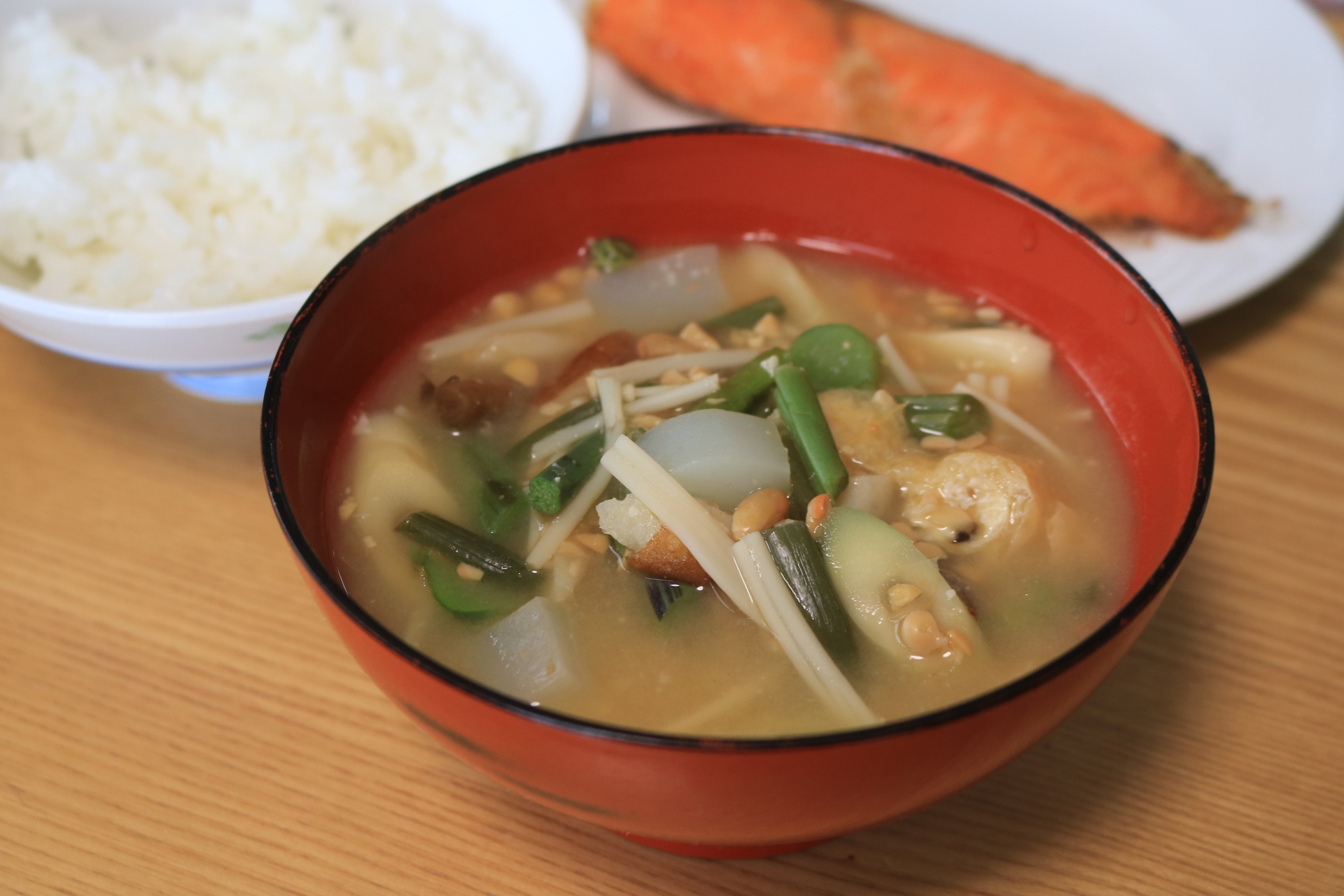
“Natto Soup” is a local dish from Yamagata made by adding mashed natto to miso soup. It often includes tofu, mushrooms, and edible wild plants, and is known as a nutritious dish.
It is characterized by a deep flavor that combines the richness of natto with the umami of miso, and is a dish often appearing on winter tables. It pairs well with rice and is a warming dish.
Sweet Simmered Carp
“Sweet Simmered Carp” is a local dish from Yamagata, mainly eaten in the Yonezawa area. It is a dish in which carp is simmered in a sweet and savory sauce made with sugar and soy sauce. The fish is simmered until even the bones are tender, and it is characterized by a rich flavor.
It pairs well with rice and is known as a type of local dish that makes you want to eat more rice.
Imoko Soup
“Imoko-jiru” is a local cuisine of Yamagata, made primarily with taro (imoko), along with chicken, vegetables, and other ingredients. It is especially popular in the inland areas and is said to be the original form of the widely known imoni stew today.
The seasoning varies by region, using soy sauce or miso, but it features the mild richness of taro combined with the flavors of the ingredients, creating a simple and gentle taste. Being a hearty soup with plenty of ingredients, it has long been enjoyed as a staple dish served with rice.
Points for Enjoying Yamagata’s Local Gourmet
In Yamagata, there are various local dishes and regional gourmet foods that make the most of nature’s blessings. These dishes are characterized by their deep connection to the seasons and local culture. Therefore, by being mindful of the seasonal ingredients and the food culture of each region while tasting them, you can enjoy Yamagata’s gourmet cuisine even more.
Here, we will introduce some points to enjoy Yamagata’s local gourmet foods more fully.
Be aware of the relationship with the seasons
Yamagata’s local cuisine is characterized by dishes that make the most of seasonal ingredients. In summer, there is Yamagata Dashi made with summer vegetables like cucumbers and eggplants; in autumn, Imoni made with taro; and in winter, Dongara-jiru made with cold cod, offering dishes to enjoy in each season.
By eating them in their peak season, you can better appreciate the natural flavors and deliciousness of the ingredients.
Enjoying the taste differences by region
Local cuisine in Yamagata Prefecture can vary in seasoning and ingredients depending on the region. The prefecture is broadly divided into four areas: Murayama, Shonai, Okitama, and Mogami, and the differences in natural environment and food culture of each area are also reflected in the dishes.
For example, even for the same dish of imo-ni (simmered potato soup), inland Murayama typically uses beef and soy sauce flavor, while the Shonai area commonly uses pork and miso flavor. By experiencing these regional differences through taste, you can gain a deeper appreciation of Yamagata’s food culture.
Summary
Yamagata offers numerous local dishes and regional specialties that make the most of the blessings of nature. These simple yet flavorful dishes pair very well with plain white rice.
The dishes introduced here are all representative specialties of Yamagata’s food culture. When visiting Yamagata, be sure to enjoy local gourmet foods and experience the unique culinary charms of each area.

![[Yamagata, Oguni Town / Iide Town] Climbing ‘Kuratesan’ and the ‘Submerged Forest’ of Shirakawa Lake | Be amazed by the huge panorama from Kuratesan and the magical Shirakawa Lake! アイキャッチ](https://bongheiberg.yamagata.jp/wp-content/uploads/2026/05/image2.jpg)
![[Yamagata, Higashine City] Sobadokoro Higashitei|A place near the Higashine sakuranbo station where you can try cold meat soba etc アイキャッチ](https://bongheiberg.yamagata.jp/wp-content/uploads/2026/02/398e9260dd7f4f868180b280bdeb03f8-scaled.jpg)
![[Yamagata, Yonezawa City] Nationally Designated Historic Site ‘Uesugi Family Mausoleum’ | Visiting Report of a Historic Spot Where Uesugi Kenshin and Uesugi Yozan Rest アイキャッチ](https://bongheiberg.yamagata.jp/wp-content/uploads/2026/03/gobyosyo-main-1-scaled-e1773895183538.jpg)
![[Yamagata, Yamagata City] Chuka Soba Kumo no Ito Akane-ga-Oka Branch | Report of Ramen with Niboshi Soup and Chewy Noodles アイキャッチ](https://bongheiberg.yamagata.jp/wp-content/uploads/2026/02/IMG_28352.jpg)
![[Yamagata, Yonezawa City] Tokiwa Branch Noboru | Luxurious Yonezawa Beef Bowl! Actual Eating Report アイキャッチ](https://bongheiberg.yamagata.jp/wp-content/uploads/2026/03/tokiwanoboru-gyudon2.png)