

[Yamagata’s Imoni] ‘There’s no way you can do it with frozen taro, right?’ When I made it with ingredients from a wholesale supermarket, the results were unexpected!
2026/05/23 This site contains advertisements. Category: local-cuisine
![[Yamagata’s Imoni] ‘There’s no way you can do it with frozen taro, right?’ When I made it with ingredients from a wholesale supermarket, the results were unexpected! アイキャッチ](https://bongheiberg.yamagata.jp/wp-content/uploads/2026/02/IMG_8582-scaled.jpg)
“I’m making Yamagata Imoni for dinner tonight.” When I said that, my family’s reaction was… honestly, not great.
“Wait, Imoni? Can you even make that?”
“Isn’t peeling taro a nightmare? Who’s doing it?”
“Uh… are you using frozen taro from Gyomu Super?”
“Doesn’t that stuff fall apart and taste watery?”
To be honest, even I wasn’t fully confident. Frozen vegetables are convenient, but they often carry the image of being “lazy” or “inferior to fresh.” And when it comes to taro—where that sticky, creamy texture is everything—there’s no way frozen could beat fresh… or so I thought.
But the moment we took a bite of the finished Imoni, the atmosphere at the table completely changed. “…This tastes like a restaurant dish.”
In this article, I’m sharing the recipe for“The Ultimate Yamagata Imoni Made Entirely with Gyomu Super Ingredients”— a dish that shattered my family’s prejudice and had everyone reaching for seconds.
- You only use a knife twice (for the long green onion and shimeji mushrooms)
- Only 1,669 yen (tax included) for 10 servings—unbeatable value
- Even someone like me, who isn’t good at cooking, can make it by simply “simmering everything”
Why Gyomu Super’s “Satoimo Rangkiri” Is the *Strongest Ingredient* for Imoni
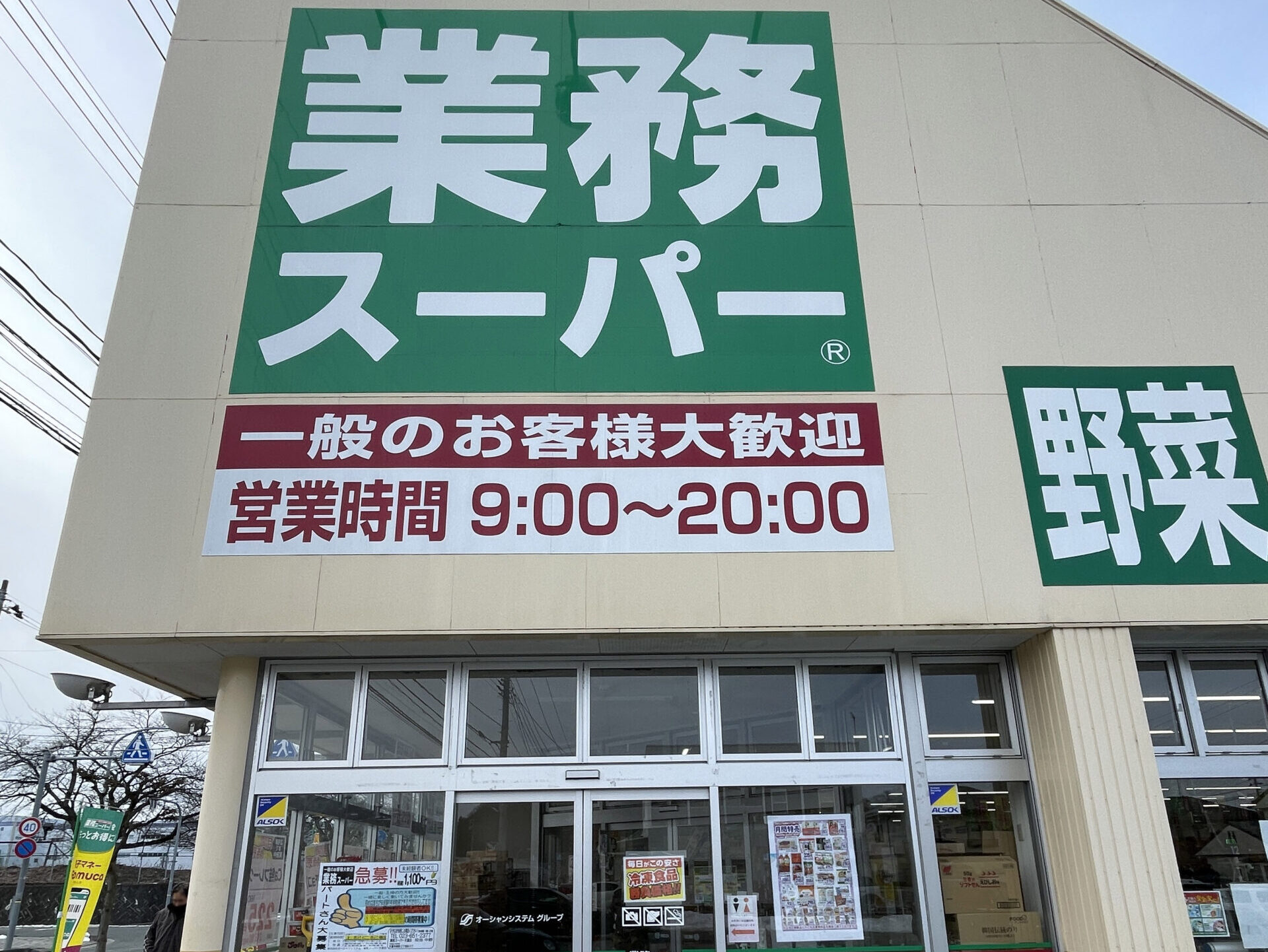
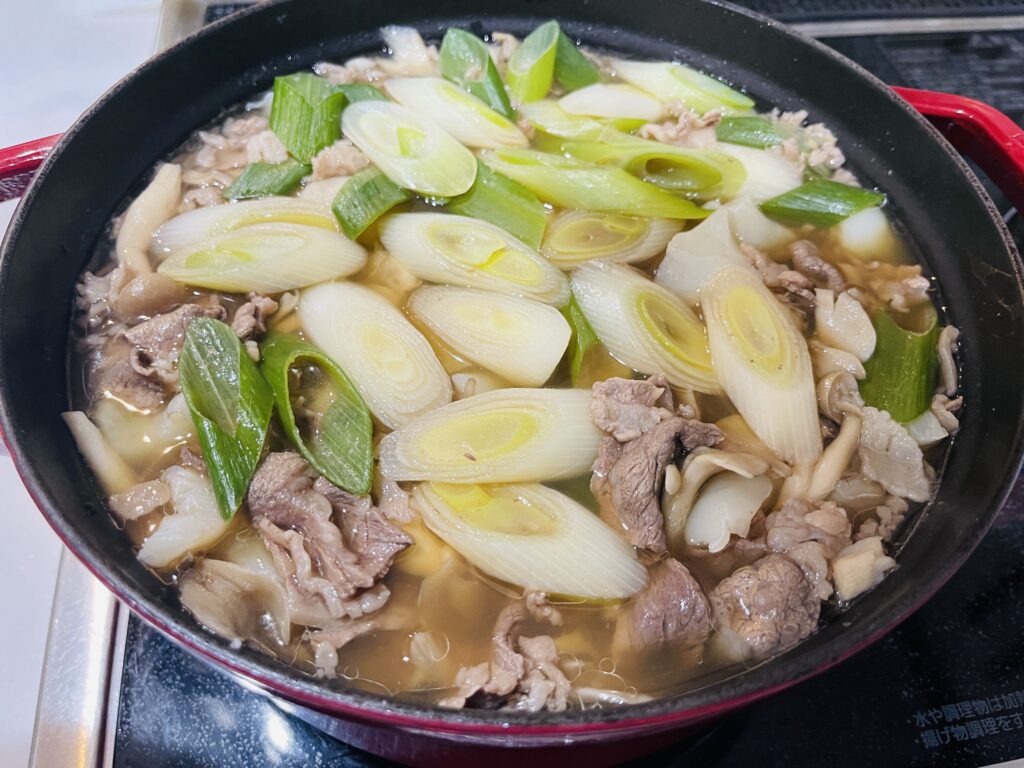
Many people assume that “frozen taro = not tasty.” But once I actually used it, Gyomu Super’s Satoimo Rangkiri turned out to be the ultimate time‑saving ingredient—especially for Imoni.
Here’s why it deserves that title.
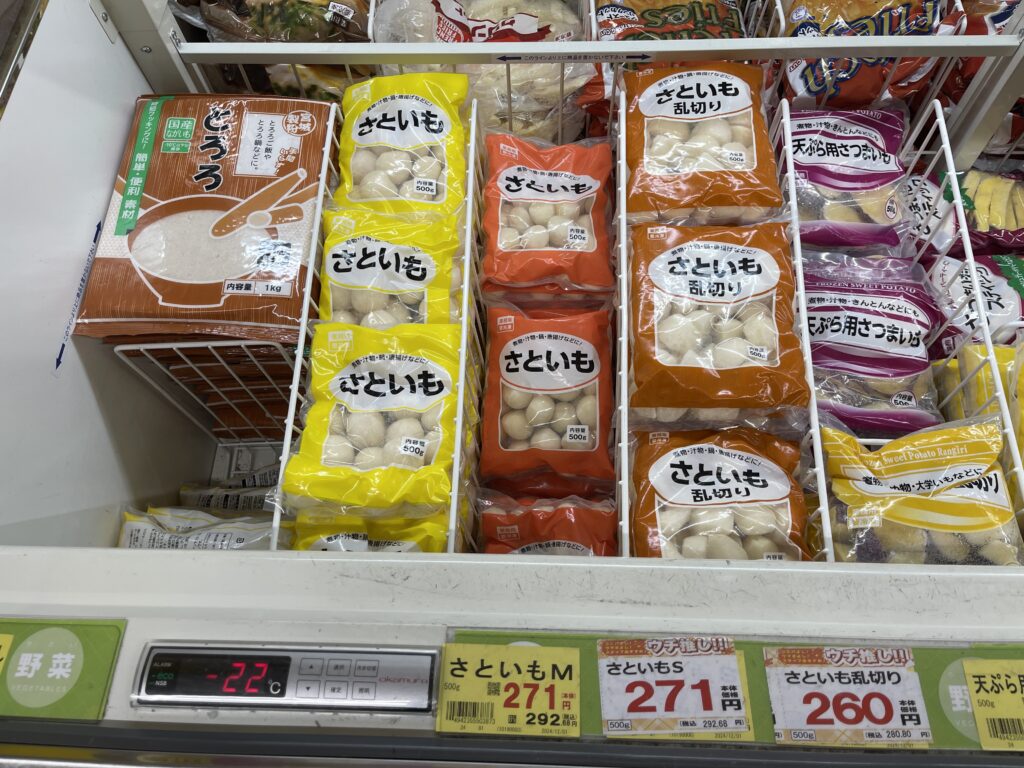
Freedom from the “Taro-Peeling Hell”
The toughest part of making Imoni is peeling taro. Washing off mud, wrestling with slippery taro, and ending up with itchy hands… All of that disappears with Gyomu Super. Just open the bag—done.
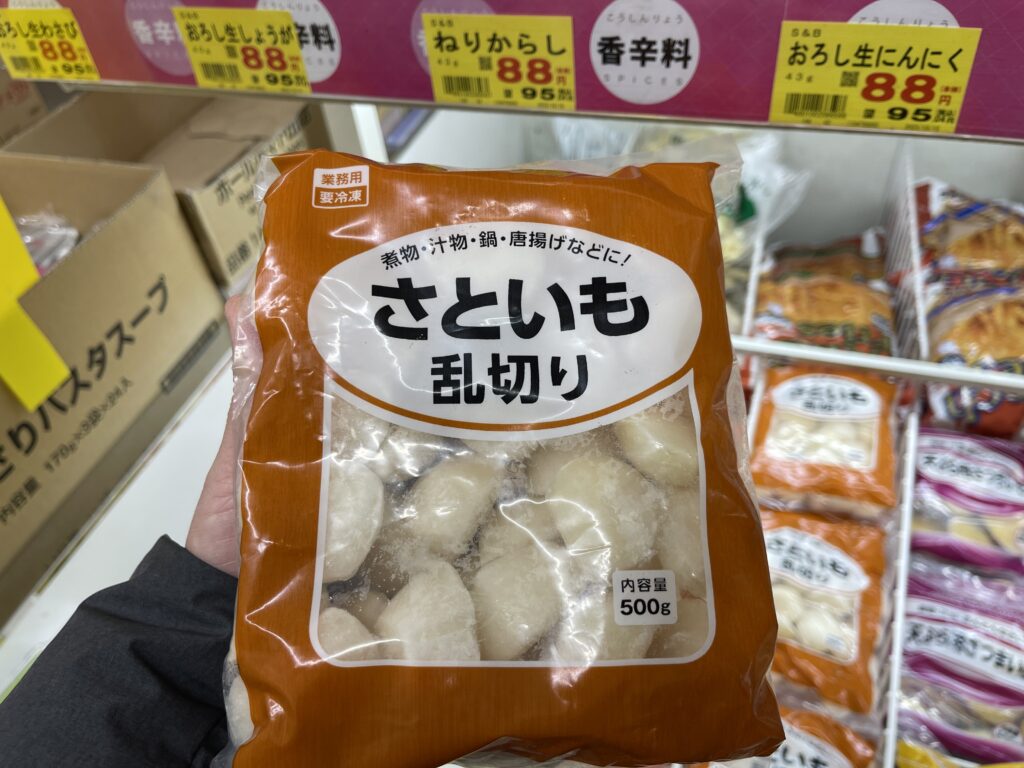
“Rangkiri” Cuts Absorb Flavor Better
I chose the irregular “rangkiri” cut instead of whole M‑size taro. This is a crucial point. Because the pieces have uneven, knife‑like surfaces, they have more surface area than whole taro. This allows the flavor to soak into the center much faster.
They also look “hand‑cut,” so unless you tell someone, they’ll never guess they’re frozen.
【Ingredient Cost Breakdown】10 Servings for 1,669 Yen! Here’s What I Bought
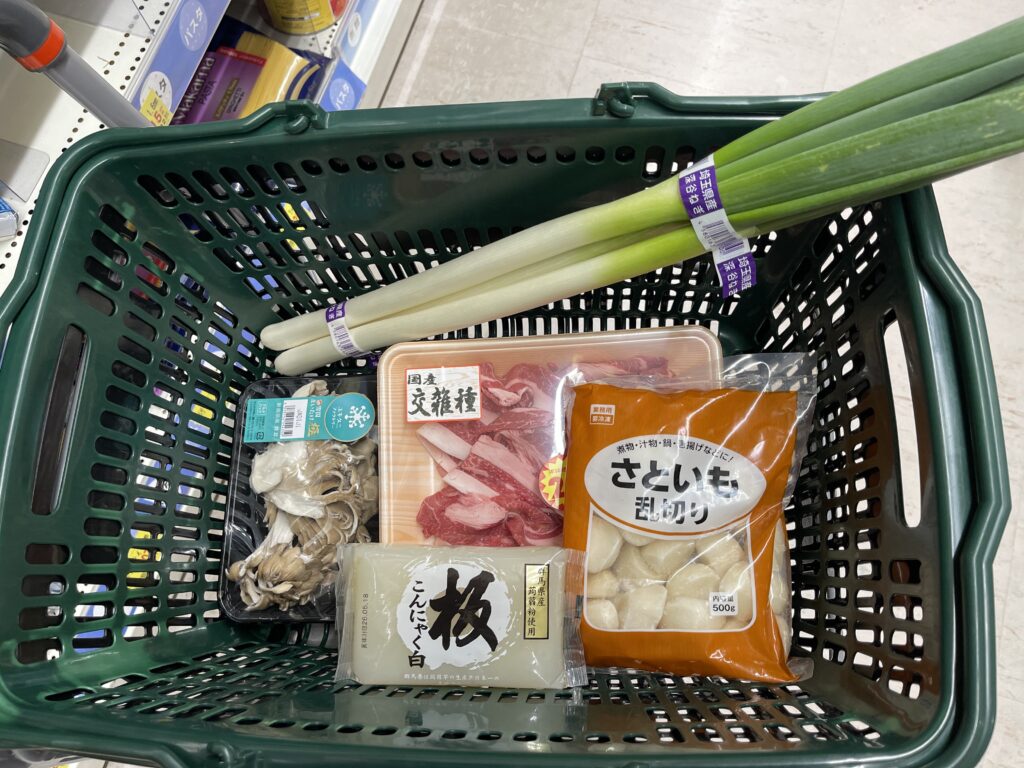
The usual belief that “Imoni gets expensive when you use beef” doesn’t apply at Gyomu Super! This time, I bought *all* ingredients—including beef—there.
Here’s the cost breakdown:
| Ingredient | Price (tax excluded) |
|---|---|
| Satoimo Rangkiri (500g) | 260 yen |
| Beef slices (372g) | 888 yen |
| Konnyaku (2 pieces) | 86 yen |
| Maitake mushrooms (1 pack) | 148 yen |
| Bunashimeji mushrooms (1 pack) | 108 yen |
| Long green onion (1 stalk) | 56 yen |
| Subtotal (tax excluded) | 1,546 yen |
| Tax (8%) | 123 yen |
| Total (tax included) | 1,669 yen |
※ Seasonings (soy sauce, sake, sugar, water) not included.
※ Prices vary by store and season.
※ Prices as of February 2026.
At about 167 yen per serving (tax included), it costs roughly the same as a convenience‑store rice ball, yet you get a hearty soup filled with beef.
Check the Gyomu Super aisles! Just look for these items
To help you navigate the large store, here are the sections where each ingredient can be found.
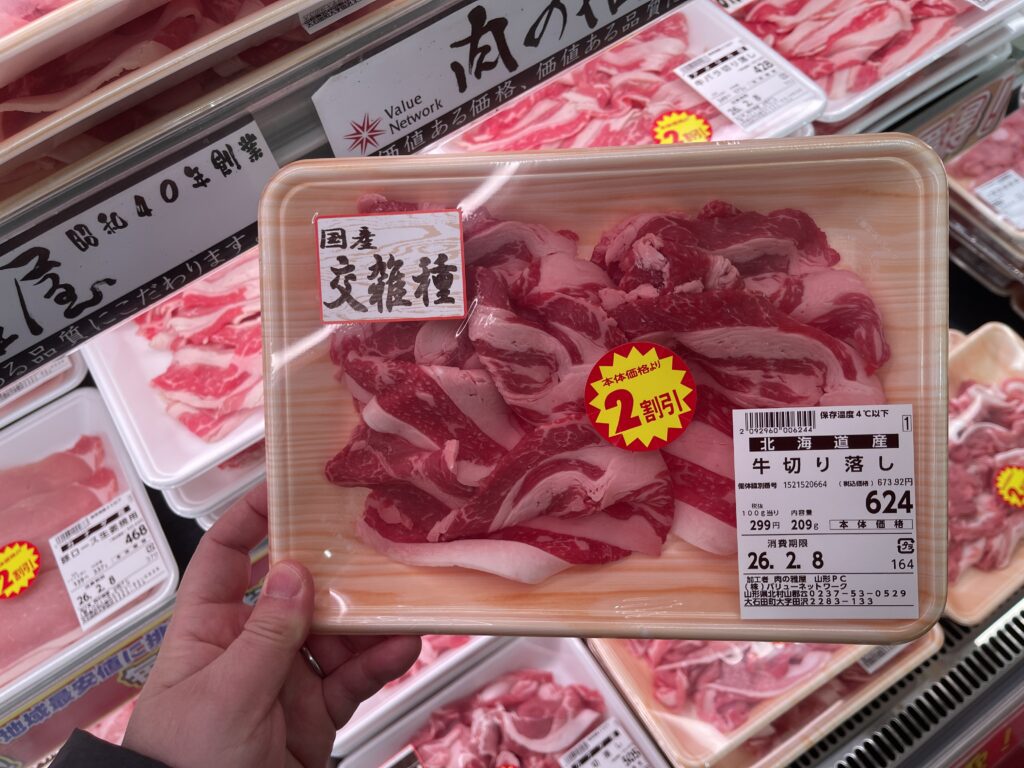
First, pick up the sliced beef from the meat section. It adds richness to the Imoni.
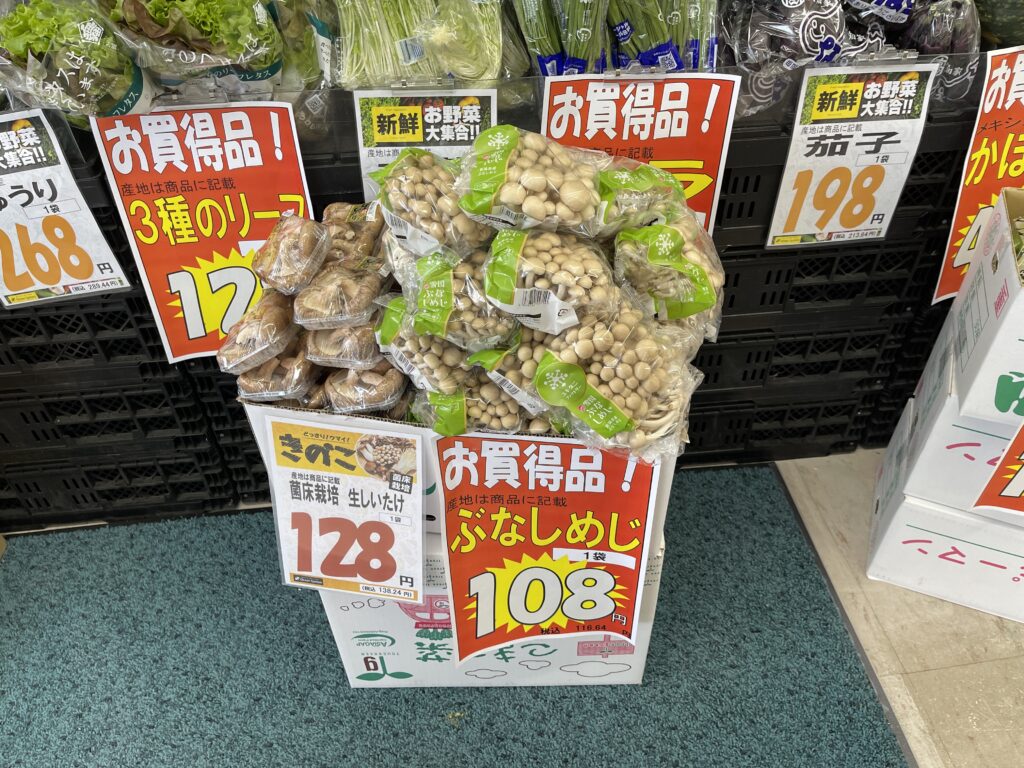
Next, head to the konnyaku and mushroom section. I bought maitake and bunashimeji. Bunashimeji being cheap is always a plus.
Since I wanted plenty of konnyaku this time, I bought two packs.
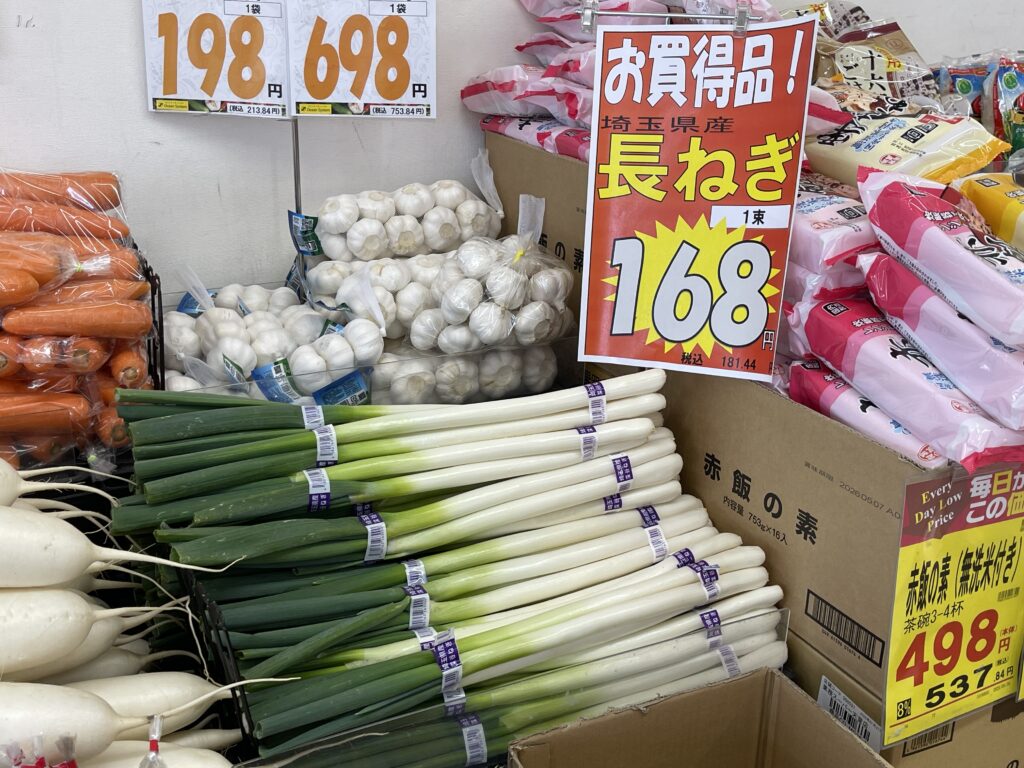
Lastly, pick up a long green onion from the produce section. It was also at a good price. If you care about aroma, fresh green onion is recommended.
Time to make Imoni! The golden route: “Just add everything in order”
Now let’s make Imoni using the ingredients from Gyomu Super. No tricky heat control or special techniques needed—just add everything to the pot in the correct order. Even someone like me, who rarely cooks, can’t fail with this method.
Here’s my simple step‑by‑step process.
Step 1: Simmer taro and konnyaku starting from cold water
First, add water, the frozen satoimo, and torn konnyaku to the pot and heat.
【Point】
Just wait until it boils. Do not add seasonings yet.
Step 2: Add two‑thirds of the seasonings and the mushrooms
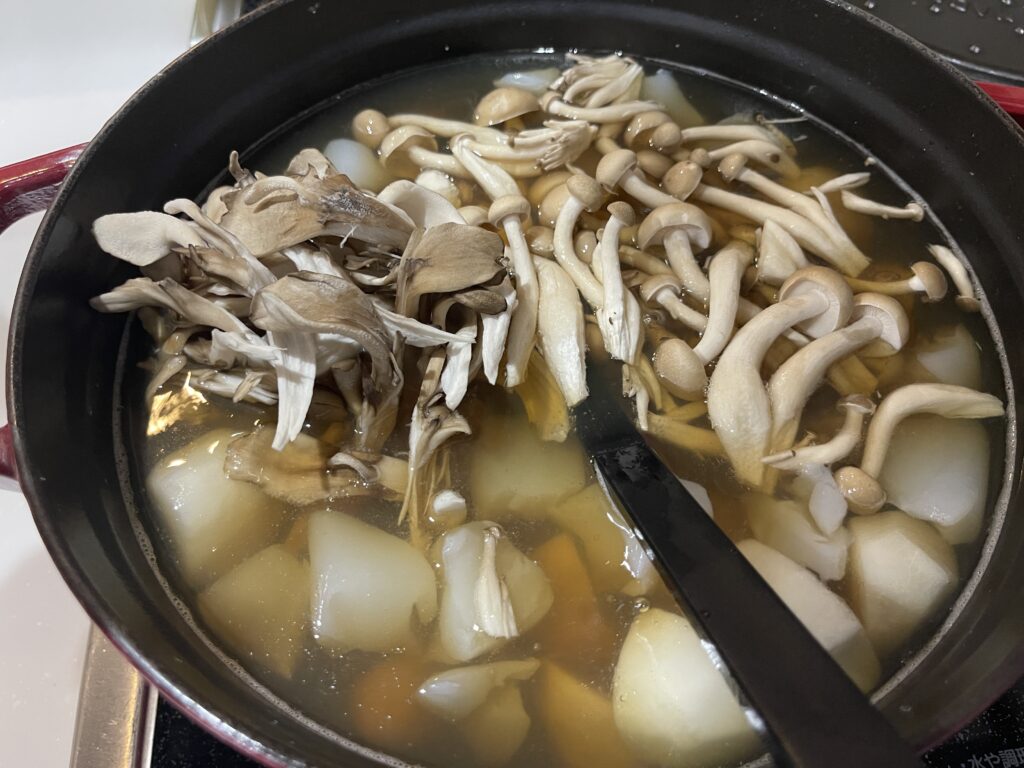
Once the taro softens, add two‑thirds of the seasonings. Then add the maitake (torn by hand) and shimeji (trimmed and separated). Even if you add them casually, mushrooms naturally release delicious umami.
Step 3: Add the star ingredient—beef
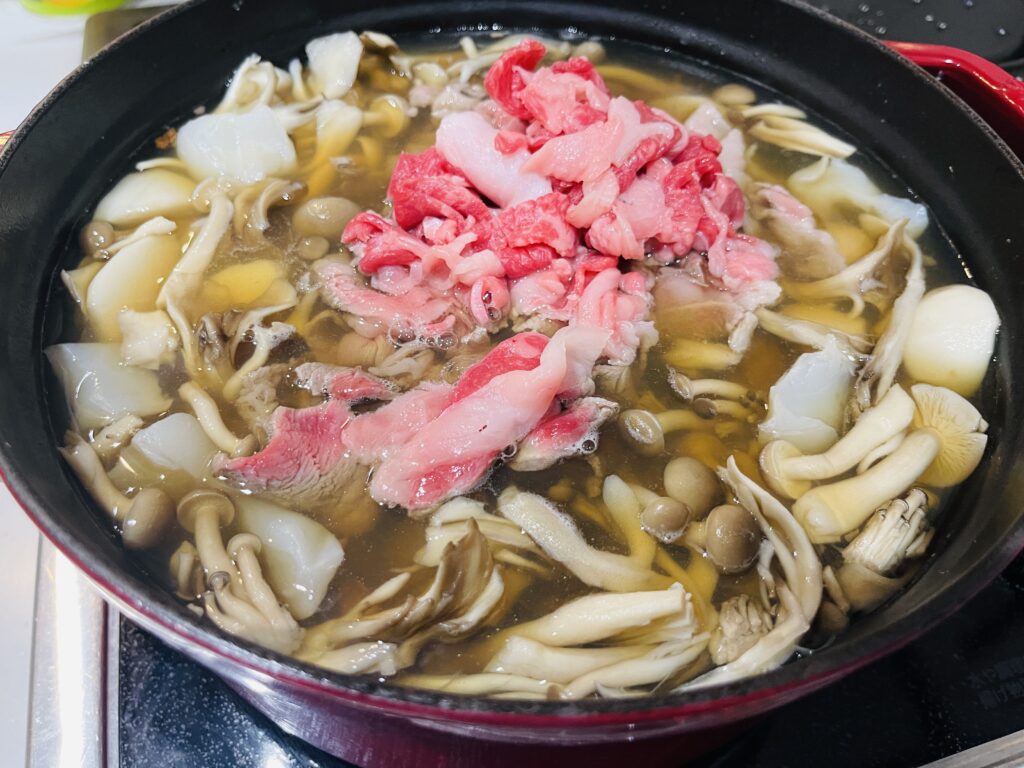
Once the mushrooms cook and the kitchen fills with a nice aroma, it’s time for the star. Add the beef and let it cook through.
Step 4: Finish with green onion and the remaining seasonings
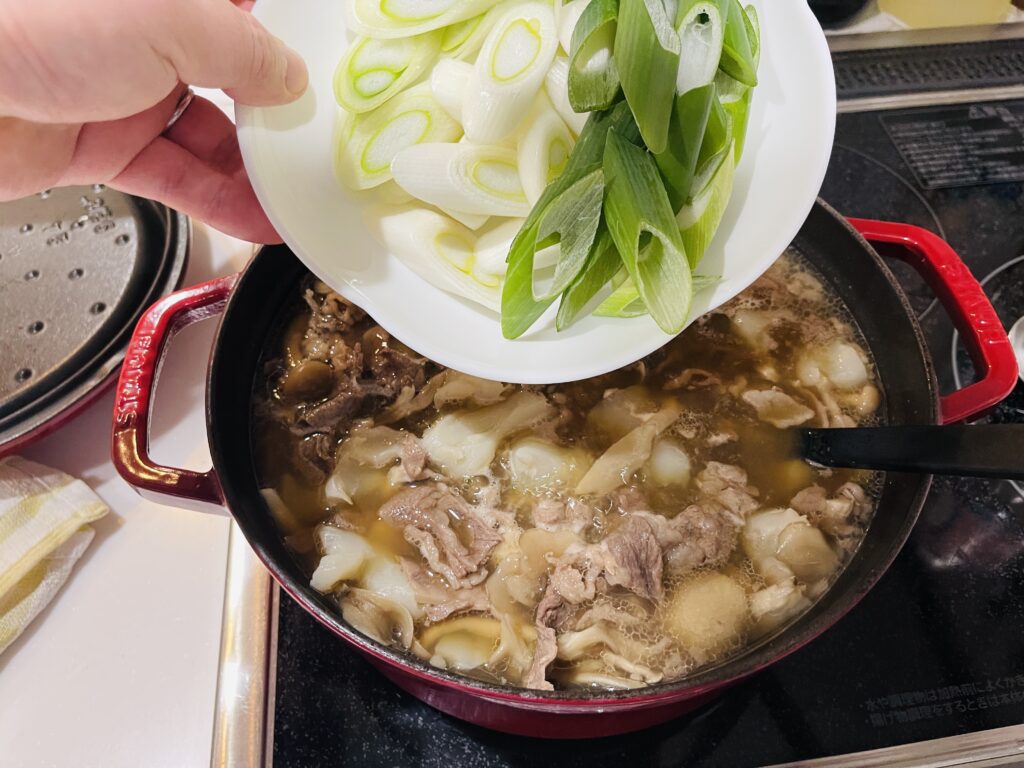
When the beef changes color, it’s the final step. Add the diagonally sliced green onion and the remaining one‑third of the seasonings.
That completes the dish.
Taste and adjust: add soy sauce if too light, water if too strong. Anyone can achieve the same flavor.
【Imoni tasting review】My family’s reaction after mocking frozen ingredients
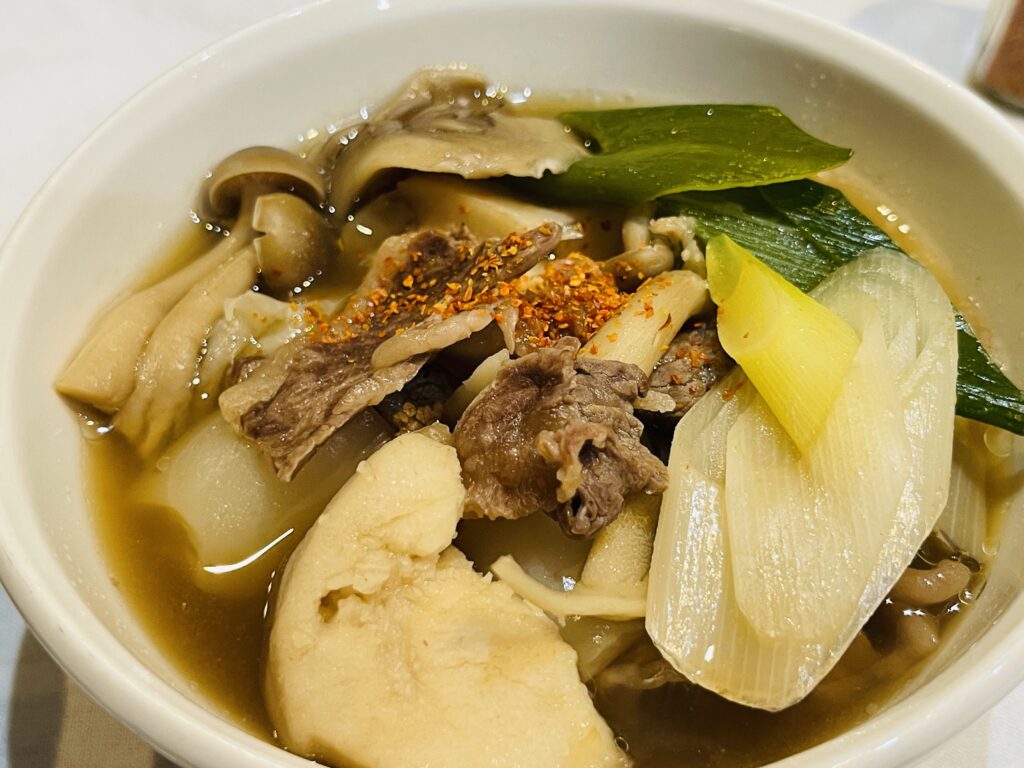
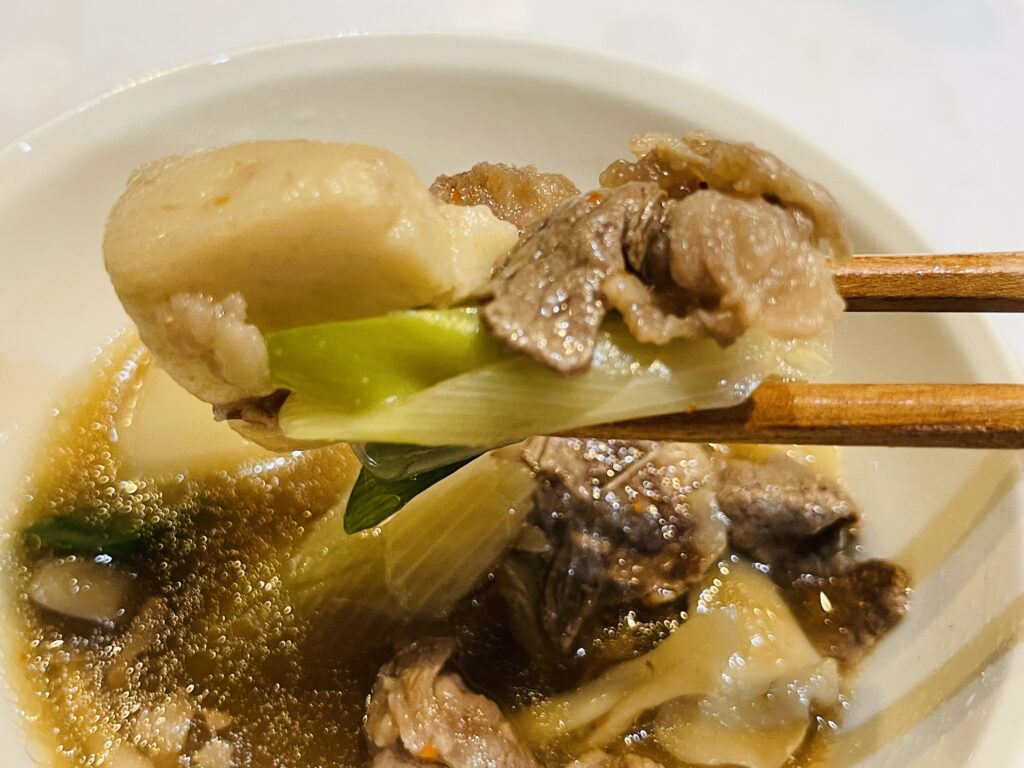
When I placed the finished Imoni on the table, sweet aromas of soy sauce and beef filled the room.
“I hate to admit it… but it’s delicious.”
The first to speak was my wife, who had been the most skeptical about frozen food. “…I hate to admit it, but this is delicious.” “The taro is creamy, and the flavor reaches all the way to the center.” “If you didn’t tell me, I’d never guess it was frozen.”
Thanks to the rangkiri cut, the flavor absorption is outstanding. The beef fat and mushroom broth intertwine beautifully, creating a richness you’d never expect from a 167‑yen bowl.
No worries even if you make 10 servings! Tomorrow’s victory: Imoni curry udon
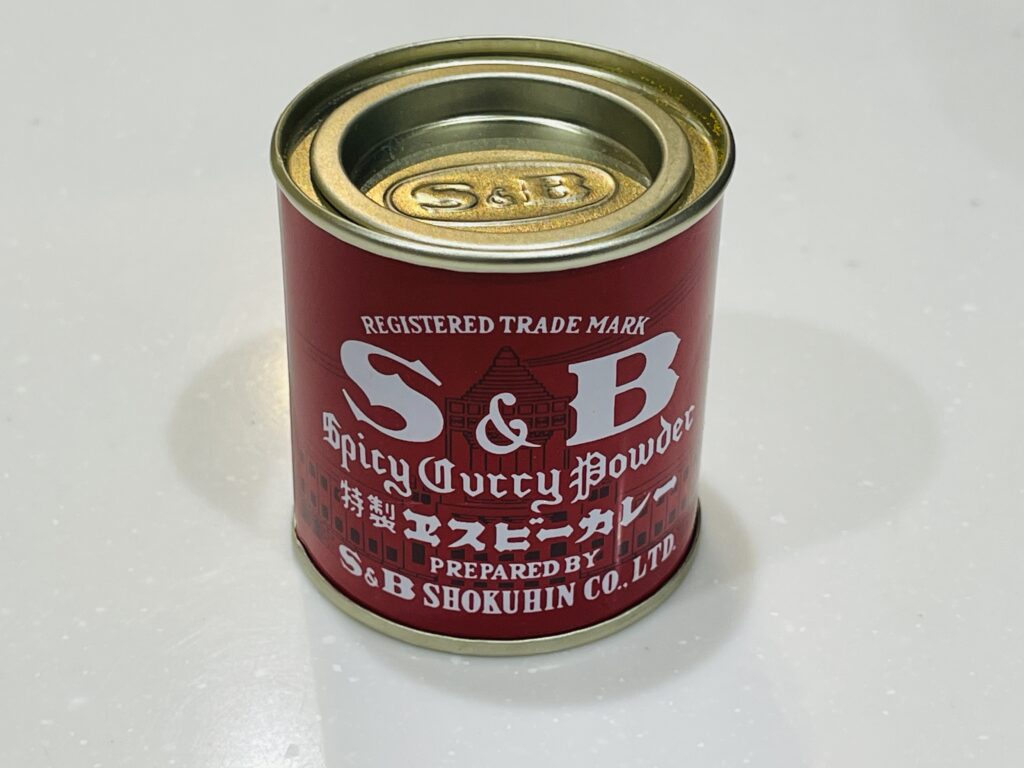
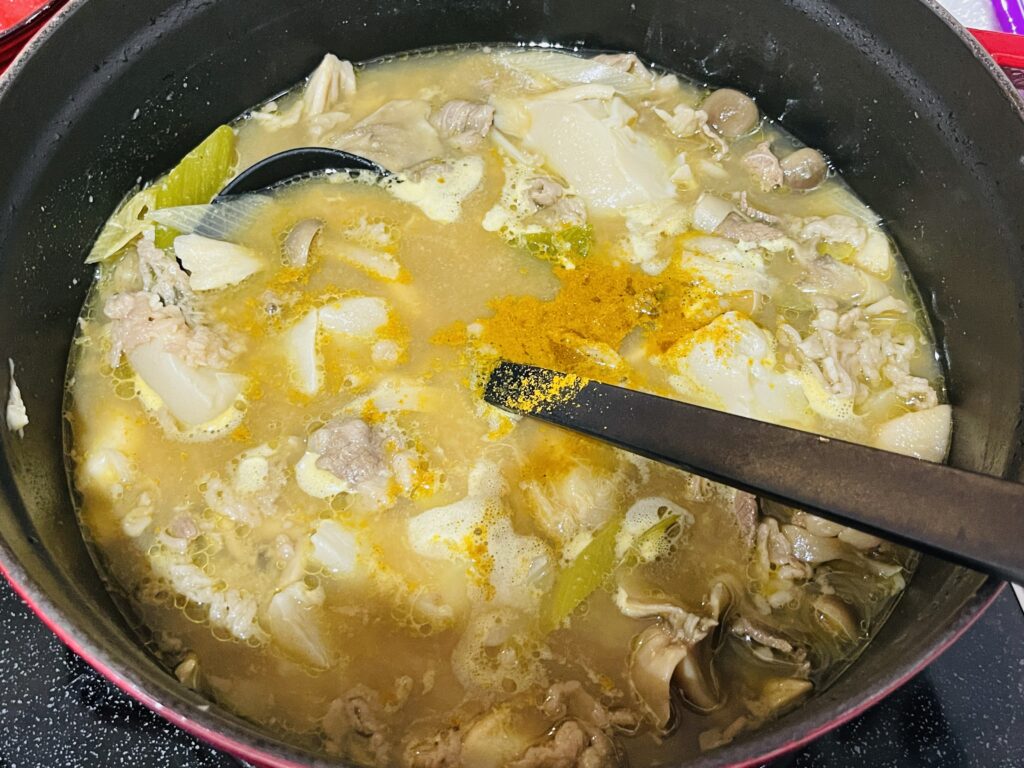
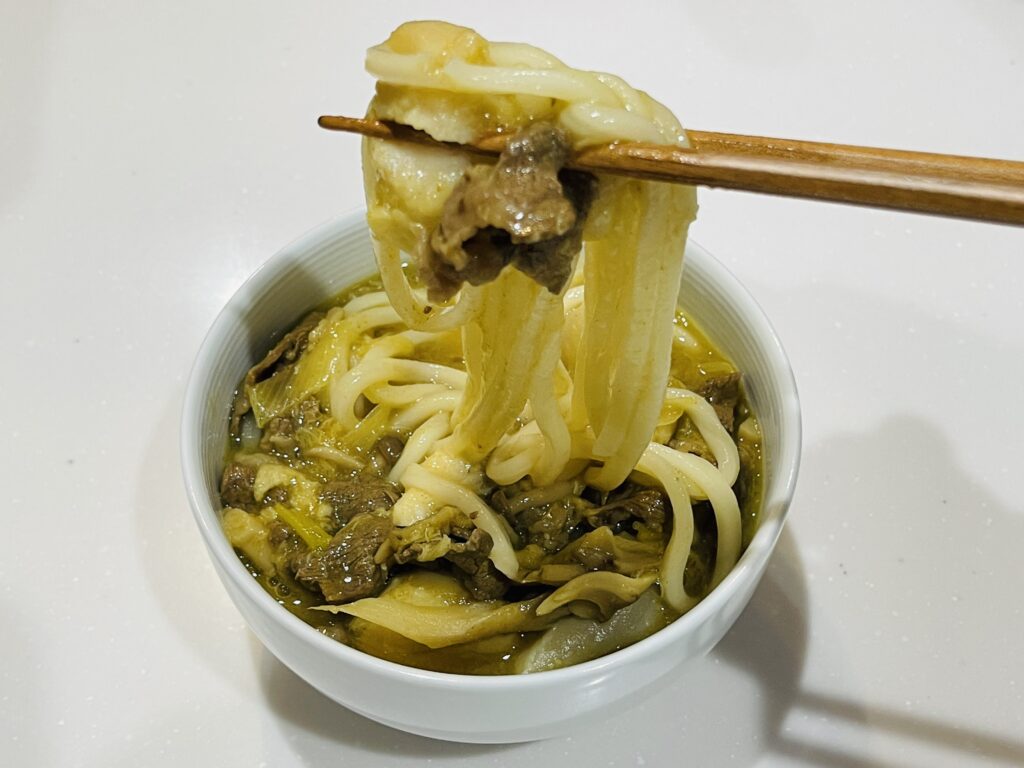
Worried about leftovers from 10 servings? Don’t be. Imoni is meant to be enjoyed the next day.
- Reheat the leftover Imoni
- Add curry roux (or curry powder)
- Add thawed frozen udon
That’s all you need for a soba‑shop‑style curry udon packed with broth flavor. Honestly, making Imoni just for this is totally worth it.
Summary

Forget the idea that “frozen food is lazy” or “cheap ingredients aren’t tasty.” Try making this Imoni just once.
- Ingredients available at over 1,100 Gyomu Super stores nationwide
- Total ingredient cost: 1,669 yen (about 167 yen per bowl)
- You only use a knife twice—long green onion and shimeji stems
Next weekend, why not pick up the ingredients at your local Gyomu Super and surprise your family? You’ll likely become a fan of Gyomu Super’s satoimo—and of Yamagata Imoni itself.
![[Only Yamagata Residents Know] The Rebel of the Natto World: ‘Yukiwari Natto’ | Introducing Its Bewitching Flavor That Needs No Soy Sauce and Recipe Variations! アイキャッチ](https://bongheiberg.yamagata.jp/wp-content/uploads/2026/02/IMG_8491-scaled.jpg)

![[Yamagata, Oguni Town / Iide Town] Climbing ‘Kuratesan’ and the ‘Submerged Forest’ of Shirakawa Lake | Be amazed by the huge panorama from Kuratesan and the magical Shirakawa Lake! アイキャッチ](https://bongheiberg.yamagata.jp/wp-content/uploads/2026/05/image2.jpg)
![[Yamagata, Higashine City] Sobadokoro Higashitei|A place near the Higashine sakuranbo station where you can try cold meat soba etc アイキャッチ](https://bongheiberg.yamagata.jp/wp-content/uploads/2026/02/398e9260dd7f4f868180b280bdeb03f8-scaled.jpg)
![[Yamagata, Tendo City] Tento La France Factory | Delicious Gelato to Enjoy at the Roadside Station アイキャッチ](https://bongheiberg.yamagata.jp/wp-content/uploads/2026/02/IMG_8318.jpg)
![[Yamagata, Yonezawa City] Nationally Designated Historic Site ‘Uesugi Family Mausoleum’ | Visiting Report of a Historic Spot Where Uesugi Kenshin and Uesugi Yozan Rest アイキャッチ](https://bongheiberg.yamagata.jp/wp-content/uploads/2026/03/gobyosyo-main-1-scaled-e1773895183538.jpg)